7 Science-Backed Daily Habits for Longevity and Sustainable Weight Loss
Protein, fiber, lower added sugar, movement, and sleep — the habits researchers consistently link to longer life and healthier weight. No fad diets required.
Read time: 9 min read
Try MealCoach.ai free —App Store now · Google Play coming soon · 14-day free trial
Most people do not need a new diet every January. They need a handful of daily habits that research repeatedly associates with longer life, stable weight, and lower chronic disease risk — habits that are simple enough to sustain for decades, not days.
That is the overlap between longevity science and sustainable weight loss: both reward consistency over intensity. Below are seven habits backed by large cohort studies, national dietary guidelines, and decades of nutrition research — plus how to apply them without obsessive calorie counting.
1. Prioritize protein at every meal
Protein supports muscle mass as you age, increases satiety, and has the highest thermic effect of food — meaning your body burns more energy digesting it than it does digesting fat or carbohydrate. The Dietary Guidelines for Americans recommend lean protein sources spread across the day, not loaded into dinner alone.
Practical target: Include a palm-sized portion of protein (eggs, fish, poultry, tofu, legumes, Greek yogurt) at breakfast, lunch, and dinner.
2. Eat more fiber — especially from whole plants
Fiber slows digestion, feeds beneficial gut bacteria, and is one of the strongest dietary predictors of cardiometabolic health in population studies. Harvard's Nutrition Source links higher fiber intake to lower risk of heart disease, type 2 diabetes, and certain cancers.
Practical target: Build meals around vegetables, beans, whole grains, nuts, and fruit — aim for variety, not perfection.
3. Cut added sugar — not whole fruit
Added sugars (soda, sweetened coffee, pastries, candy, many packaged sauces) drive excess calories without fullness. The WHO recommends adults and children reduce free sugars to less than 10% of total energy, with additional benefits below 5%. This single habit aligns with both weight management and the national push toward healthier American diets.
Practical target: Swap sugary drinks for water, sparkling water, or unsweetened tea first — it is the highest-leverage change most people can make.
4. Favor whole and minimally processed foods
A landmark NIH-controlled feeding study found that people ate roughly 500 more calories per day on an ultra-processed diet versus a minimally processed one — with matched macros — leading to weight gain over two weeks (Hall et al., Cell Metabolism, 2019). Food processing level matters as much as calorie labels on the package.
5. Move daily — walking counts
You do not need extreme exercise to benefit. Large observational studies link 150 minutes per week of moderate activity (brisk walking counts) with lower mortality. Movement also improves insulin sensitivity, which supports weight stability. Pair nutrition changes with a daily walk after your largest meal.
6. Protect sleep (7–9 hours)
Short sleep disrupts ghrelin and leptin — hormones that regulate hunger — and is associated with higher BMI in meta-analyses. Sleep is not a "soft" wellness tip; it is a metabolic habit. Fixing sleep often makes every food decision easier the next day.
7. Score whole meals, not isolated nutrients
Calorie counting alone misses the point: a 400-calorie meal of vegetables, legumes, and olive oil affects your body differently than 400 calories of ultra-processed snacks. Longevity research from Blue Zones regions consistently shows pattern-based eating — balanced plates, social meals, mostly plants — rather than rigid restriction.
The goal is not perfection. It is building a repeatable plate you can eat for the next forty years.
How MealCoach.ai fits in
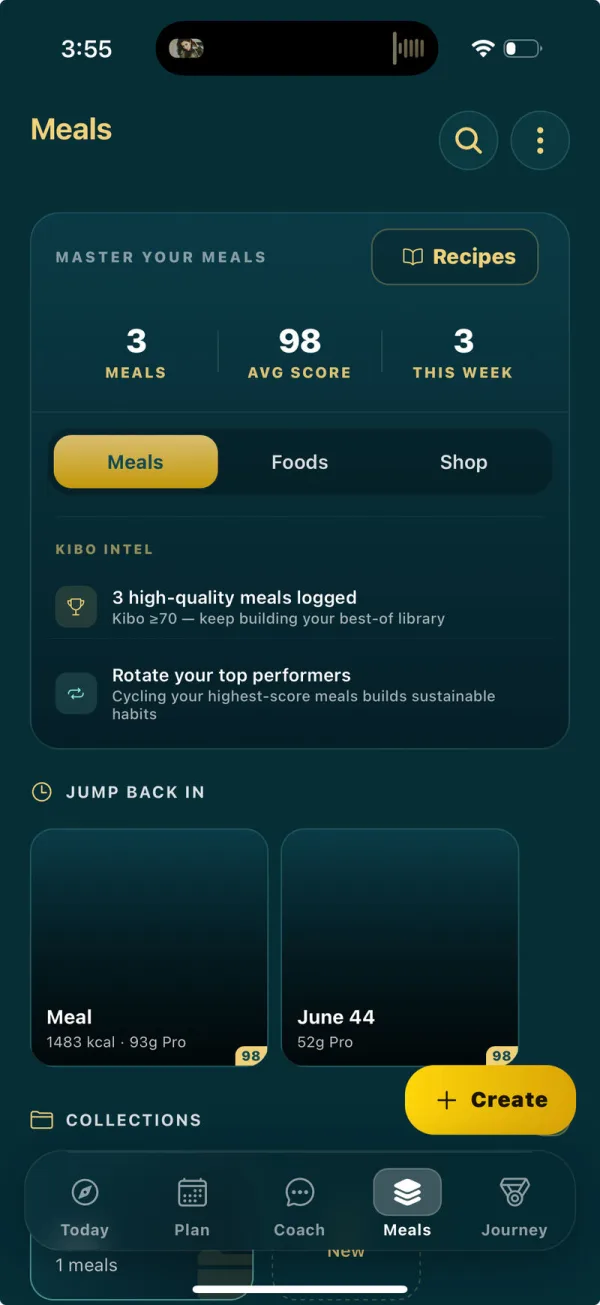
MealCoach.ai was built around this science. Log a complete meal and get clear feedback on how it supports the habits above — without logging every gram. Coach Kibo, your AI nutrition coach, helps you improve one meal at a time using a Notice → Why → Try → Choose framework rooted in behavior change research, not guilt.
Start with one habit this week. Score your next meal. See what changes.
Sources
- Healthy Longevity and Diet — Harvard T.H. Chan School of Public Health
- Dietary Guidelines for Americans, 2020–2025 — U.S. Departments of Agriculture and Health & Human Services
- Obesity and Overweight Fact Sheet — World Health Organization
- Blue Zones: Lessons From the World's Longest-Lived — Blue Zones / Dan Buettner
More to learn


Our commitment to you
MealCoach.ai is dedicated to science-backed nutrition guidance you can apply at your next meal — we're a new app building in the open. no inflated user counts — just real features you can try free for 14 days.
- Research from sources you can trust
- Practical guidance, not lecture-style calorie math
- Updated as nutrition science evolves
App Store now · Google Play coming soon · 14-day trial