How to Build a Longevity Plate: Protein, Fiber, and Whole Foods
Blue Zones, Harvard longevity research, and the Dietary Guidelines agree: build a plate you can repeat for decades. Here is the formula.
Read time: 6 min read
Try MealCoach.ai free —App Store now · Google Play coming soon · 14-day free trial
Longevity is not a supplement stack. In every region where people routinely live past 90 in good health — Blue Zones from Okinawa to Sardinia — the pattern is the same: simple, plant-forward plates, adequate protein, minimal ultra-processing, and meals eaten with intention.
You can apply that formula tonight without a passport. Here is a science-backed plate template.
The longevity plate formula
Harvard's Healthy Eating Plate and decades of aging research converge on four quarters:
½ plate: vegetables and fruit (mostly vegetables)
Color variety matters more than chasing a single "superfood." Leafy greens, cruciferous vegetables (broccoli, cabbage), berries, and legumes provide fiber, polyphenols, and potassium — nutrients consistently linked to lower blood pressure and better cardiovascular outcomes.
¼ plate: quality protein
After age 30, adults lose muscle gradually unless they resistance train and eat enough protein. Research on protein and aging supports distributing protein across meals — not just at dinner. Options: fish (especially fatty fish for omega-3s), poultry, eggs, tofu, tempeh, lentils, beans.
¼ plate: whole grains or starchy vegetables
Brown rice, quinoa, oats, sweet potato, or whole-grain bread in moderation. These provide sustained energy and feed gut bacteria when you choose minimally processed forms.
Added fats: olive oil, nuts, avocado
Blue Zones diets are not low-fat — they are right-fat. Olive oil and nuts appear in every longevity cohort studied. Fat carries flavor and helps absorb fat-soluble vitamins (A, D, E, K).
What to keep off the longevity plate
- Sugary drinks — the fastest way to add empty calories.
- Deep-fried ultra-processed foods — high in oxidized fats and sodium.
- Processed meats (bacon, sausage, deli meat) — WHO classifies as Group 1 carcinogen when consumed regularly.
- Meals you cannot sustain — the best plate is the one you will actually eat next Tuesday.
Weight loss happens as a side effect
When you build plates this way, you naturally eat more fiber and protein — the two nutrients most linked to satiety in controlled trials — and fewer ultra-processed calories. You do not need to white-knuckle hunger. You need a better plate architecture.
Build your plate in MealCoach.ai
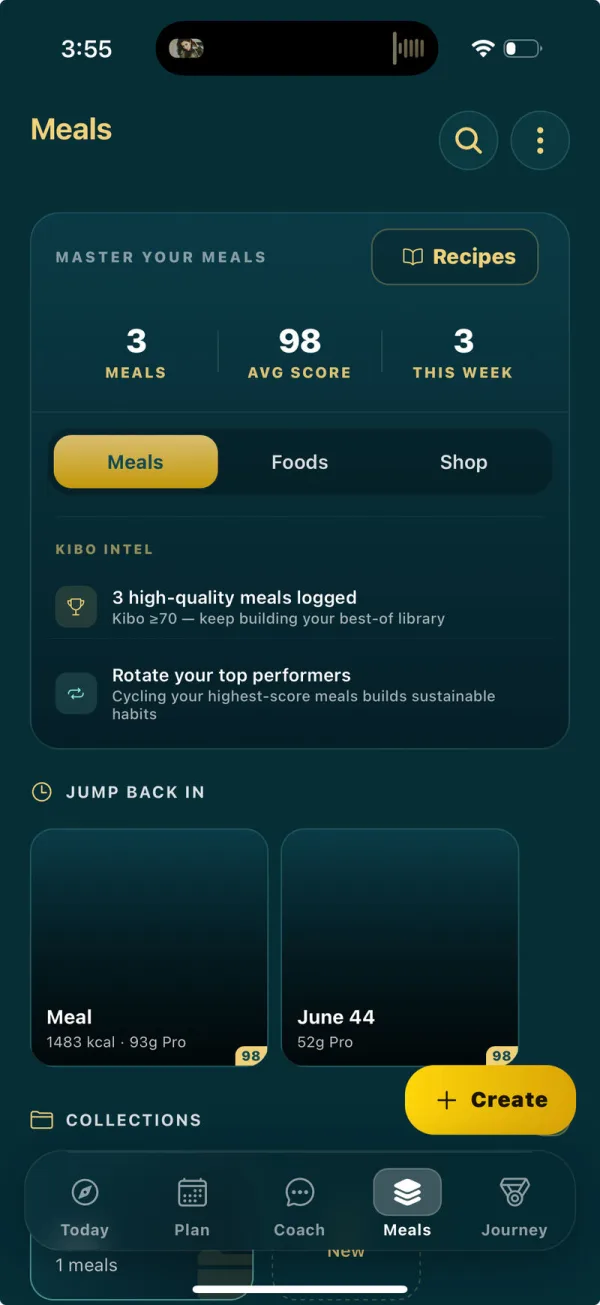
MealCoach.ai's Meal Builder lets you assemble a plate and see how it fits your goals. Coach Kibo then suggests one swap to make it better — not ten rules to memorize.
Build once. Eat for decades.
Sources
- Healthy Eating Plate — Harvard T.H. Chan School of Public Health
- Power 9: Reverse Engineering Longevity — Blue Zones
- Dietary Protein and Muscle Health in Aging — Nutrients / NIH PubMed
More to learn


Our commitment to you
MealCoach.ai is dedicated to science-backed nutrition guidance you can apply at your next meal — we're a new app building in the open. no inflated user counts — just real features you can try free for 14 days.
- Research from sources you can trust
- Practical guidance, not lecture-style calorie math
- Updated as nutrition science evolves
App Store now · Google Play coming soon · 14-day trial