Make America Healthy Again: The Nutrition Science Behind the Movement
Chronic disease, childhood obesity, and ultra-processed food dominate the MAHA conversation. Here is what the data says — and the habits that actually move the needle.
Read time: 10 min read
Try MealCoach.ai free —App Store now · Google Play coming soon · 14-day free trial
Make America Healthy Again (MAHA) has become one of the loudest public health conversations in a generation. Strip away the politics and the debate centers on something nutrition scientists have documented for years: Americans are eating ourselves into chronic disease, and the food environment makes the unhealthy choice the easy choice.
This article maps what the data actually shows — and the small number of habits that align MAHA's goals with peer-reviewed nutrition science.
The numbers driving the conversation
- Adult obesity: The CDC reports that over 40% of U.S. adults have obesity — up from roughly 30% in 2000.
- Childhood obesity: About 1 in 5 children ages 2–19 have obesity, with rates rising over the past four decades (CDC).
- Chronic disease: Six in ten American adults have at least one chronic condition; four in ten have two or more (CDC). Diet is a modifiable driver for type 2 diabetes, cardiovascular disease, and many cancers.
- Dietary risk globally: The Global Burden of Disease study consistently ranks poor diet among the top risk factors for death and disability worldwide.
These are not opinions. They are surveillance data collected across decades.
Where MAHA and nutrition science agree
Regardless of where policy lands, researchers across institutions agree on several interventions with strong evidence:
1. Reduce added sugar and sugary beverages
Sugar-sweetened beverages are the single largest source of added sugar for Americans. Reducing them lowers calorie intake, improves glycemic control, and is associated with lower type 2 diabetes incidence in cohort studies. Every major guideline — WHO, AHA, USDA — says the same thing.
2. Reduce ultra-processed food intake
UPFs now comprise more than half of calories consumed in the U.S. by some estimates. Controlled trials show they increase ad libitum calorie intake. MAHA's focus on food quality maps directly to the NOVA classification system used in peer-reviewed research.
3. Increase whole foods: vegetables, legumes, whole grains, nuts
The Dietary Guidelines for Americans recommend dietary patterns rich in these foods — Mediterranean-style, DASH, or healthy vegetarian — for cardiovascular health and weight management.
4. Make nutrition information actionable, not just available
Labels exist. Most people do not have time to decode them at 6 PM with kids asking for dinner. Tools that translate nutrition science into meal-level guidance — not lecture-level jargon — fill a real gap.
5. Focus on children's food environments
Early dietary patterns predict adult health trajectories. School meals, marketing to children, and default options in cafeterias matter. Families that model whole-food meals at home see effects regardless of policy.
Where the conversation gets noisy (and what to ignore)
Social media turns every health debate into extremes. A few evidence-based reminders:
- Whole fruit is not the enemy. Added sugar in soda is not the same biochemistry as an apple with fiber.
- Seed oils are not the primary driver of obesity. Excess calories from ultra-processed foods — regardless of oil type — are the larger lever.
- One superfood will not fix a lifestyle. Patterns beat ingredients.
- You do not need perfection to improve biomarkers. 80% whole-food meals beats 20% with a perfect label.
What you can do this week
- Replace one sugary drink daily with water or unsweetened tea.
- Add one vegetable to lunch — any vegetable.
- Cook one dinner from whole ingredients instead of ordering takeout.
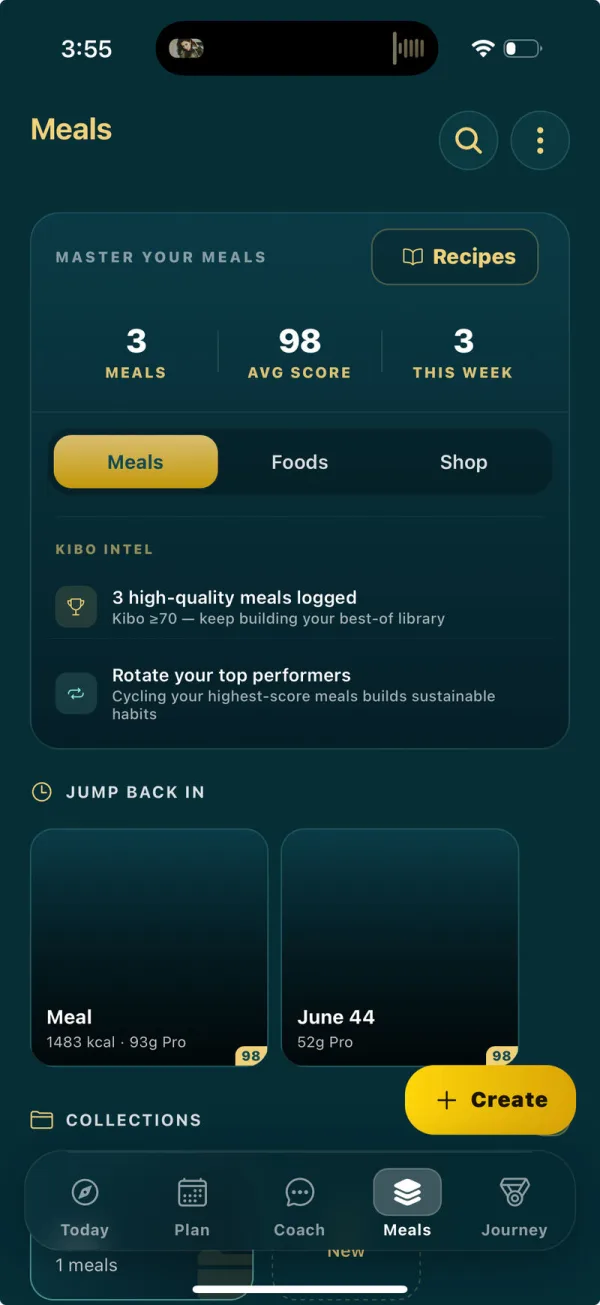
- Log that dinner in MealCoach.ai and see what Coach Kibo suggests to make it even better.
Why we built MealCoach.ai for this moment
Americans do not need another calorie counter that shames them into quitting by February. They need science translated into meals — a score that reflects how nutrition researchers actually evaluate a plate, and an AI coach that helps you improve one meal at a time.
That is the mission behind MealCoach.ai: science translated into meals you can actually eat, with Coach Kibo helping you improve one plate at a time. Make America Healthy Again starts with making your next meal healthier. We built the app for exactly that.
Download on the App Store — Google Play coming soon. 14-day trial, no inflated promises.
Sources
- Adult Obesity Prevalence Maps — Centers for Disease Control and Prevention
- Childhood Obesity Facts — Centers for Disease Control and Prevention
- Chronic Diseases in America — Centers for Disease Control and Prevention
- Dietary Guidelines for Americans, 2020–2025 — USDA / HHS
- Global Burden of Disease Study — Dietary Risks — Institute for Health Metrics and Evaluation (IHME)
More to learn


Our commitment to you
MealCoach.ai is dedicated to science-backed nutrition guidance you can apply at your next meal — we're a new app building in the open. no inflated user counts — just real features you can try free for 14 days.
- Research from sources you can trust
- Practical guidance, not lecture-style calorie math
- Updated as nutrition science evolves
App Store now · Google Play coming soon · 14-day trial